
Meet and Greets at the Vet: Relaxed Introduction Visits for a Stress-Free Veterinary Experience
Vet visits are rarely a dog’s favorite outing. Many dogs start showing signs of stress the moment they walk through the clinic door: trembling, heavy panting, a tucked tail, or even defensive behavior are all common reactions.
But a vet visit can be calmer, more cooperative, and far less stressful — with a bit of preparation and a few positive experiences beforehand.

Medical Training – underestimated, but essential
Medical Training simply means practicing examinations and care routines in a thoughtful, structured way so your dog knows what to expect — and participates willingly. It’s every bit as important as housetraining or a solid recall, because medical care is something every dog will need throughout their entire life.
Yet this type of training is often overlooked. Many dogs happily learn tricks, but when it comes to opening their mouth, showing their ears, or holding still for an exam, many people fall back on hoping for the best. In reality, Medical Training works much like trick training — just with super high-value rewards, a strong foundation of trust, and a clear purpose: your dog should understand that cooperation is safe and worthwhile.
Home is the ideal place to start, because that’s where your dog feels most relaxed. But one key piece is missing there: the unfamiliar environment of the veterinary clinic. And that’s exactly where Meet and Greets come in.
What actually happens during a Meet and Greet?
A Meet and Greet is a calm, pressure-free visit to the vet clinic with no exams and no treatments. Your dog can walk into the clinic, explore at their own pace, enjoy some truly amazing treats from the staff, and hear the typical background sounds — all without injections, temperature checks, or being held still.
These visits usually only take a few minutes. They’re simple, friendly, and designed to build positive emotions. The goal isn’t for your dog to “perform” anything, but simply to realise: “Nothing bad happens to me here.”
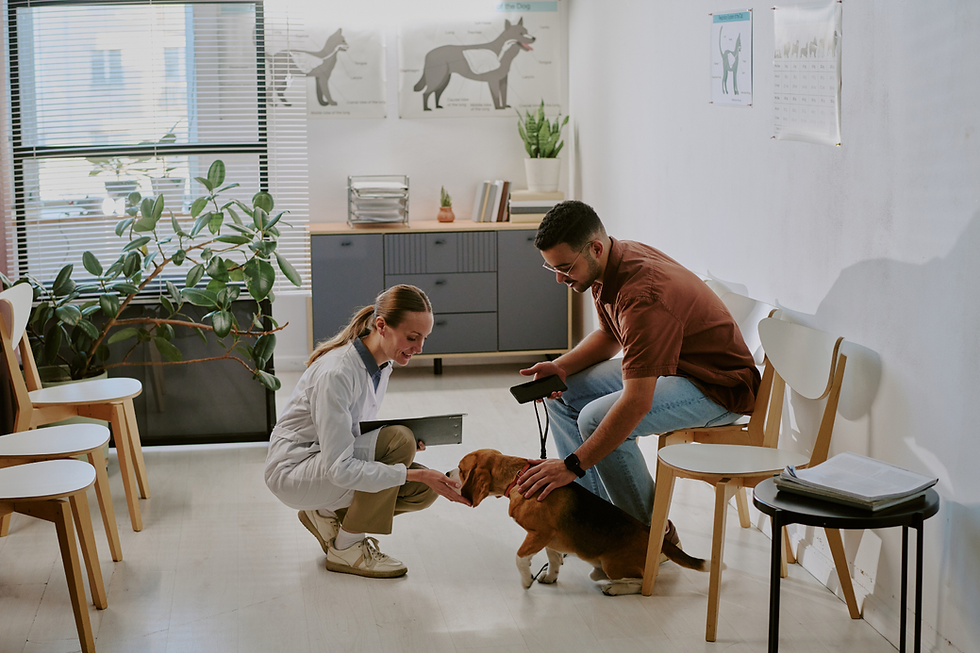
For a Meet and Greet to happen smoothly, one thing is essential: a bit of consideration. These visits aren’t part of the official clinic schedule — they’re something the team offers voluntarily. Staff members carve out extra moments for them, often between appointments or during quieter times.
That’s why calling ahead and asking politely is so important. Many clinics are happy to help, but there will always be days when no calm moment is available. Walking in unannounced can disrupt the routine and add unnecessary stress.
At the same time, many clinics genuinely enjoy seeing a dog come in without pressure. These positive encounters make their work much easier later on — and benefit everyone involved.
Why Meet and Greets work – a look inside your dog’s brain
Dogs learn through associations. If a puppy or young dog has early vet visits that are mostly painful or frightening — for example from vaccinations or uncomfortable exams — their brain stores that experience as a threat. Each future visit reinforces that negative link.
The limbic system, especially the amygdala, handles emotional processing. The scent of the clinic, certain sounds, or even the sight of a white coat can trigger a stress response — long before anything actually happens. The body releases stress hormones, and the dog shifts into fight-or-flight mode.
Meet and Greets interrupt that cycle by building positive associations before negative ones have a chance to take root. The brain starts learning:
“Vet clinic = treats, gentle handling, fun,” instead of “Vet clinic = danger.”
A relaxed dog makes the veterinary team’s job not only more pleasant, but also safer and more effective. Exams can be more thorough, diagnoses more accurate, and the risk of injury is significantly lower. And for you as the guardian, calmer visits mean far less stress. Nobody wants to watch their dog panic or resist a necessary procedure.
What Meet and Greets can change for your dog
One introductory visit already helps — several well-planned ones are even better. They can:
• prevent fear from developing, especially in puppies
• build trust as your dog recognizes the team and learns nothing bad happens
• help your dog get used to smells, bright rooms, and typical clinic sounds
• make future exams easier because your dog stays calm and approachable
• strengthen Medical Training by creating the positive emotions needed for cooperation
• prepare your dog for emergencies, when calm handling can be critical
Ultimately, these visits achieve something fundamental: the vet clinic becomes a familiar place, not a source of alarm.

What a Meet and Greet can look like
Not every clinic advertises Meet and Greets, but many are open to them when asked. Some modern, behavior-focused clinics even include them as part of their concept.
It’s important to remember that clinics offer these visits voluntarily and out of genuine care for the animals. They invest time into your dog’s wellbeing without being able to bill it as a standard medical service. Because of that, it’s essential to approach these visits with respect. Never drop in without calling first — always ask politely if a visit is possible. Be understanding if the timing doesn’t work, and stick to whatever appointment and duration you agree on.
Veterinarians who support Meet and Greets are showing how much they value low-stress handling and animal welfare. It’s often worth asking about this when choosing a clinic.
How to make your Meet and Greet successful
Preparation
Call the clinic and ask kindly whether a short visit might be possible. Most clinics will suggest quieter times outside peak hours. Let the staff know that it’s simply a familiarization visit with no medical procedures. Bring high-value treats — something your dog really loves.
During the visit
• No pressure: Your dog sets the pace. Some explore confidently; others prefer to observe first — both are completely fine.
• Lots of reinforcement: Praise and reward every voluntary approach, glance, or interaction with the staff.
• Keep it short: Several brief, pleasant visits work far better than one long session that becomes overwhelming.
• Gentle introduction: If your dog is relaxed, the team may invite them onto the scale or gently introduce them to equipment or light handling. Important: never lure your dog if they seem unsure — only while they remain truly comfortable.
• End on a positive note: Finish the visit while your dog is still relaxed and happy. Ending only after stress appears defeats the purpose.
How often?
Regular Meet and Greets are ideal, especially for puppies and young dogs. The frequency must be realistic for the clinic and should never interfere with their regular work. In a perfect world, you might stop by weekly or every other week in the early months, then once a month during the first year, and later as needed or before upcoming appointments. But even fewer visits help — every positive experience counts.

Conclusion: Short visits, big impact
Meet and Greet visits at the vet are one of the most valuable investments you can make in your dog’s long-term wellbeing. A dog who walks into the clinic calmly benefits for life: less stress during routine exams, better medical care through cooperative behavior, a higher quality of life without fear, and more safety for everyone involved.
As part of thoughtful Medical Training, Meet and Greets create the emotional foundation for a positive relationship with the veterinary clinic — one that will matter again and again throughout your dog’s life.
Just give your clinic a call and ask politely about a short visit. With a bit of luck, your dog’s next trip through that door won’t lead straight to injections or stressful handling, but to friendly voices and some truly irresistible treats.
Download the DOGLi app now and discover the best enrichment ideas for your dog!


Comments